- The monolithic bottleneck: Traditional CMS engines (WordPress, Drupal) couple the content database and the frontend HTML generation into a single vulnerable server process.
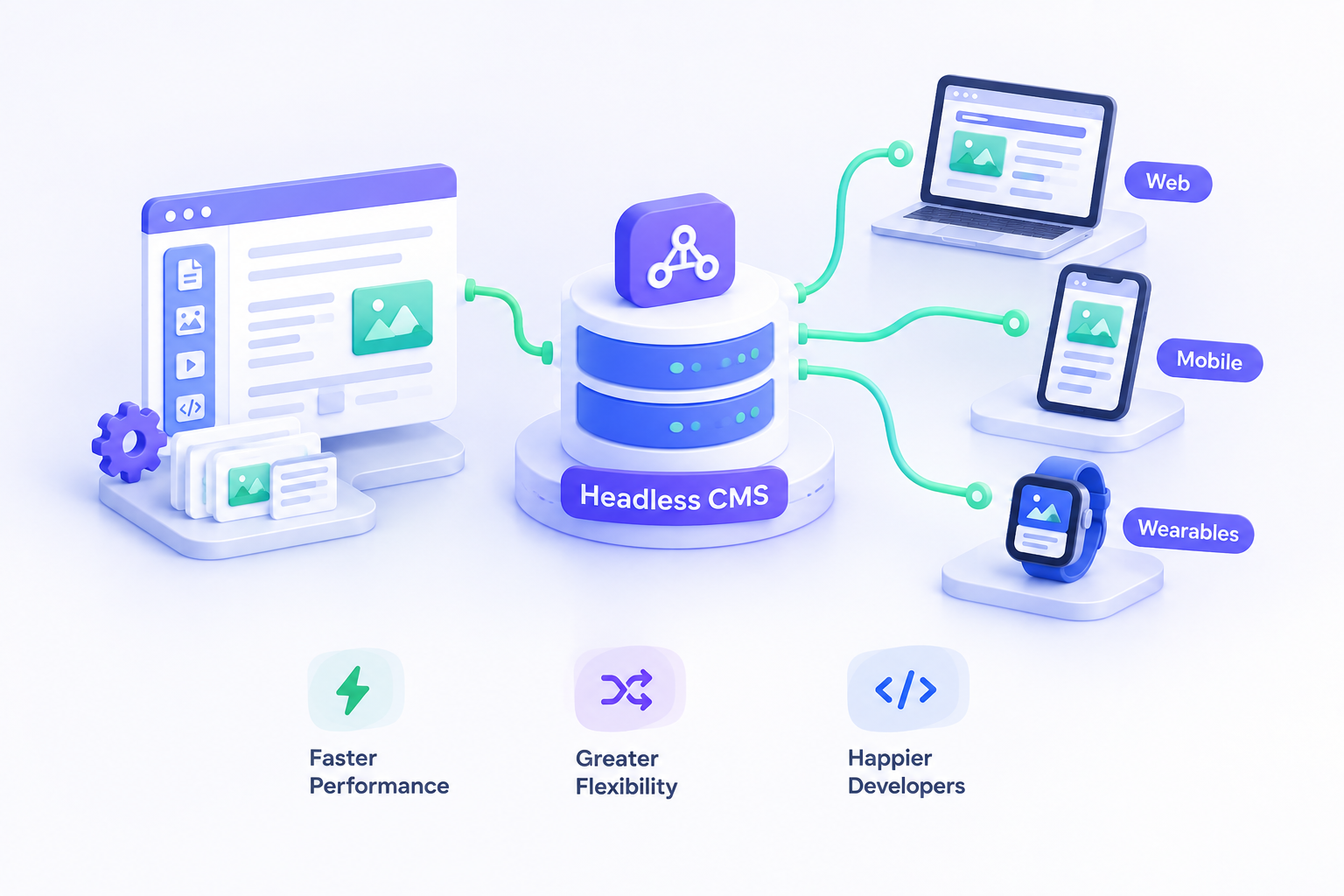
- Omnichannel syndication: A headless CMS functions as a single source of truth, distributing content via GraphQL APIs to your website, iOS app, Android app, and smart displays simultaneously.
- Bulletproof edge security: By deploying statically generated pages on global CDNs, there is zero direct database access exposed to the public internet, eliminating SQL injection threats.
- Editorial velocity: Content creators work in modern visual dashboards with instant preview environments, while software engineers iterate freely on modern React/Next.js component libraries.
The Architecture of the Decoupled Web
For twenty-five years, the world built websites on monolithic Content Management Systems. Platforms like WordPress and Drupal bundled three distinct layers into one tightly coupled stack: the database, the editorial admin panel, and the frontend presentation templates.
In 2026, this monolithic model is crumbling under modern commercial demands. Businesses must publish content not just to desktop browsers, but to native mobile apps, smartwatches, voice assistants, and digital retail signage. A Headless CMS strips away the presentation layer, treating content as pure, structured data accessible via high-speed APIs.
1. Why Monoliths Are Slow by Design
Every time a visitor lands on a traditional WordPress page, the server executes dozens of PHP scripts, queries the MySQL database 40+ times, concatenates HTML fragments, and sends the payload down a wire. Even with complex caching plugins, this dynamic rendering cycle introduces latency.
In a headless architecture (built with tools like Strapi, Sanity, or Contentful paired with a Next.js or Astro frontend):
- Pre-rendered HTML: Pages are compiled ahead-of-time during automated build pipelines.
- Edge Delivery: Pre-rendered static files live on edge nodes (Cloudflare, Vercel, AWS CloudFront) located within 15 milliseconds of the user's physical geographic location.
- Instant Cache Invalidation: When an editor clicks "Publish", webhooks automatically rebuild only the modified page in under 800 milliseconds.
| Architectural Feature | Monolithic CMS (WordPress / Drupal) | Headless CMS + Edge Frontend (Dazora) |
|---|---|---|
| Time to First Byte (TTFB) | 600ms - 1,800ms (server dependent) | 35ms - 80ms (global edge cached) |
| Vulnerability Profile | High (exposed PHP & SQL ports) | Virtually Zero (static files at edge) |
| Multi-Platform Publishing | Web only; requires custom RSS/APIs | Single API feeds Web, iOS, Android, Kiosks |
| Server Infrastructure Costs | Scales up with traffic spikes ($300-$800/mo) | Near zero edge distribution ($20-$50/mo) |
| Developer Agility | Restricted to legacy PHP template tags | Modern React, TypeScript, and Tailwind |
2. Unmatched Security: The Static Shield
Consider how traditional websites get hacked: automated botnets scan millions of domains searching for unpatched plugin vulnerabilities, SQL injection flaws, or brute-force attackable /wp-login.php endpoints.
With a decoupled headless architecture, your content database and CMS admin portal can be placed behind a private VPN or firewall. The public website served to visitors consists of purely static HTML, CSS, and pre-compiled JavaScript. There is literally no database server on the public edge for an attacker to compromise.
3. Business Case: Enterprise Financial Payback
Transitioning to headless is not merely an engineering aesthetic preference — it delivers quantifiable enterprise ROI:
- Lower Cloud Invoices: Serving static assets from CDN caches uses 90% less CPU and RAM than running dedicated Apache/Nginx web servers.
- Zero Black Friday Downtime: When traffic spikes by 10,000%, edge networks absorb the load effortlessly without database connection pool exhaustion.
- Talent Retention: Top-tier software engineers prefer building in modern TypeScript/React ecosystems rather than maintaining legacy 15-year-old PHP codebases.